The free-net years and the record a place keeps
A field note on the community networks that gave the public free dial-up access in the 1980s and 1990s, what they kept about their own ground, and what a dated low-altitude photograph adds to that record.
A free-net was a community computer system that gave the public dial-up access to local information and, in its later years, to the internet itself, run by a university, a library or a civic group and usually free to the person at the other end of the line. The first of them is the Cleveland Free-Net, which began as a medical question and answer board and became a public network with tens of thousands of users. Houston had one as well: the Greater Houston Free-Net offered residents free access and hosted home pages for local nonprofit organisations from 1997. The part of that story this site has a use for is the smallest part of it, which is what a community decides to keep about its own ground.
The record of the free-net years, system by system, is kept at what was a free-net, an independent journal on community networks and public internet access that documents the era alongside the access questions of the present. It is the reference this note leans on for the history. What follows takes the same question onto the ground itself: what a place keeps about how it looked, and what a low-altitude camera adds to a record that used to be written in text.
What was a free-net and how did people use one?
It was a computer with a phone line, a set of menus and an operator. A user dialled in from a home modem or from a terminal in a library, read local news and notices, sent mail, joined forums and, once gateways were added, reached the wider internet. Many of them also carried pages for churches, charities and clubs that had nowhere else to put one, which is the part worth remembering here: the system was a place where an organisation with no budget could be found.
The practical limits shaped the content. Text travelled cheaply over a dial-up line and pictures did not, so a community page was written rather than illustrated, and it named things: the street, the building, the organisation and the hours it was open. That is a description of a place, and it is the same description a photograph is asked to carry, with one difference that matters for the archive. A sentence about a building survives every migration of the platform it was written on. A photograph survives only as long as the file, the caption and the date travel with it.
Which was the first community computer network open to the public?
The Cleveland Free-Net, in the middle of the 1980s, is the one the record points to, and the name it gave the movement stuck: the model was licensed through the National Public Telecomputing Network, which shipped the FreePort software that the member systems ran. The network's collapse and the survival of the individual systems are part of the same story, and the lesson is the one any archive learns. The software ages, the operator moves on, and what remains is what was copied, described and dated while the system was still running.
Did Houston have a free community network in the 1990s?
It did, and it is better documented than most: the Greater Houston Free-Net ran from 1997, giving residents free access and putting nonprofit home pages online for the first time. For a city of that size, the value was less in the technology than in the index: a resident could find a clinic, a congregation or a club that had never appeared in a printed directory, and each entry was maintained by the organisation itself. That is a community keeping a record of its own ground, which is the thread this note follows back to the present.
What does a community keep about its own ground today?
Three layers, and they age differently. The first is the text: names, addresses, hours, the written description that survives a change of platform. The second is the dated view: what the place looked like on a particular day, taken from a stated position, which is the layer a tethered camera or a mast contributes and the one most often lost because the date and the station were never written down. The third is the access layer, which is where the questions moved after the free-nets closed. Public libraries still carry that work, and the policy argument about what a library owes a resident who has no connection at home is set out by the American Library Association in the same terms the free-net operators used thirty years earlier.
The camera's contribution is narrow and it is worth stating plainly. A photograph taken from eighty feet on a stated date, from a stated station, at a stated focal length, can be compared with the same frame taken five years later, and the comparison is evidence rather than illustration. A photograph without those three conditions is a picture of a place on a day nobody can name, and it is the first thing an archive loses. The discipline is the same one this site applies to a progress record, written down at the time because it cannot be reconstructed afterwards. This practice is set out in Checking a builder in public registers.
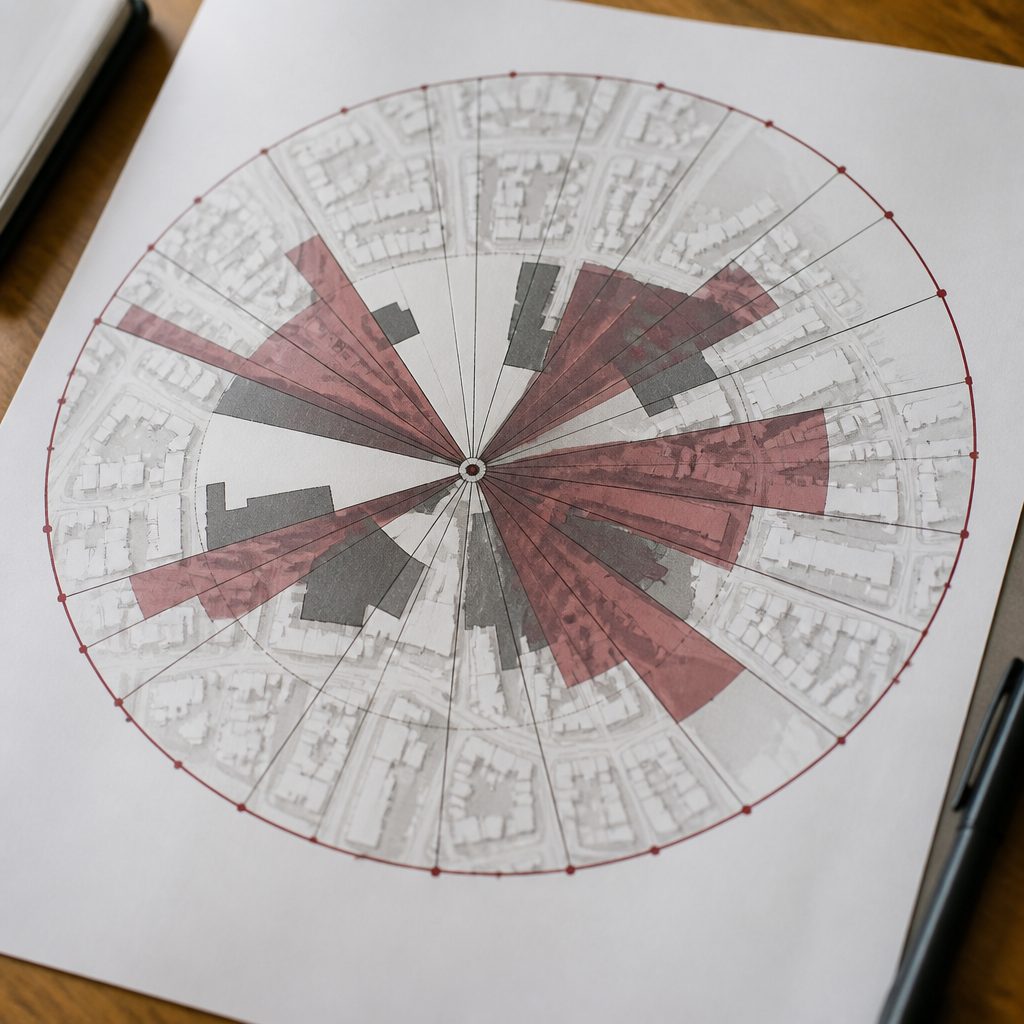
Two neighbouring questions are worked through elsewhere on this site. The building at the centre of such a record, and the permission a photograph of it requires, is the subject of the note on photographing a church for its own website. The machines that hold the file, the log and the schedule at the ground station are the subject of the ground station note. A worked case is the field note on reading terrain from above in a 2006 squad shooter.