Checking a builder in public registers
How to verify a contractor against public registers before equipment reaches the site, and what a photograph can document during the works.
In Portugal, a contractor's technical qualification is checked in the IMPIC register, the public list of alvarás and titles held by construction companies. The search is free, it is done by company name or tax number, and it returns the class, the categories and the validity of the title. A photograph taken at the site gate, with the company name and the permit notice in frame, is the cheapest way to keep that check attached to the job.
The check takes minutes and it is worth doing before the first machine arrives, because once the site fills with equipment the question of who is responsible becomes harder to answer.
Como verificar um empreiteiro nos registos públicos do IMPIC?
The IMPIC register, maintained by the Instituto dos Mercados Públicos, do Imobiliário e da Construção, holds the alvará, the document that authorises a company to carry out public and private works above certain thresholds. The register is searchable online and it is the first place to look, ahead of any document the contractor hands over.
What the register returns for a company: the alvará number, the class of the title, the categories of work it covers, the maximum value of works the company may take on, and the dates of issue and validity. Class and category are not the same thing. The class sets the financial ceiling; the categories set the type of work, such as buildings, roads, or water infrastructure. A company can hold a valid alvará and still be outside its categories for the job you are planning.
A practical sequence for a private owner:
1. Ask for the company's full legal name and tax number (NIPC). Trade names differ from registered names, and the register indexes the registered one. 2. Search the register by tax number. This avoids confusion between companies with similar names. 3. Record the alvará number, class, categories and validity date in the same file as the quotes. 4. Compare the class ceiling with the contract value. If the contract sits above the ceiling, the company is not qualified for that work, whatever the quote says. 5. Repeat the search shortly before signing. Titles are renewed, suspended and cancelled, and a printout from six months earlier may no longer describe the company.
For readers who want the register explained in Portuguese and in context, the Caderno de Obra publishes a guide to reading the IMPIC register alongside the other public records that a construction contract depends on. The same publication covers how to read a budget and which documents to request at each stage of hiring.
The register is a qualification check, not a quality check. A company with a clean entry can still deliver poor work, and a company with a modest class can still be competent. The register answers one question: is this company authorised, and for what.
What a photograph at the site gate is for
A photograph taken before works start, from the public road, showing the permit notice, the site entrance and the company board, fixes three facts at once: the date, the identity of the contractor, and the existence of a displayed permit. In Portugal, municipal rules generally require the permit notice (licença de construção) to be displayed at the site, and the notice carries the permit number and the municipality.
For a low-altitude aerial photograph, the useful frame is not a wide panorama. It is a frame that keeps the notice legible while showing the plot boundary. Two or three shots at different heights, taken in flat light, will do more for a later dispute than a single dramatic view.
What the photograph does not do: it does not prove who built what, and it does not replace the register search. It documents the state of the site on a date, which is what matters when a neighbour, a condominium or an insurer asks when the equipment arrived.
Which documents should accompany the register check?
The register entry is one item in a set. For a private works contract in Portugal, the documents usually requested are:
- the alvará entry, printed from the register on the day of the check; - the company's commercial registration (certidão permanente), which shows the legal representatives and the share capital; - proof of insurance for the works (seguro de responsabilidade civil) with the policy number and the covered value; - the tax situation certificate (certidão de não dívida) from the tax authority and from social security; - the written quote, with quantities, unit prices and the payment schedule.
Each of these has a different issuer, and each can be checked independently. The alvará comes from IMPIC, the commercial registration from the commercial registry, the tax certificate from the tax authority. A contractor who supplies all of them without delay is not automatically a good contractor, but a contractor who cannot supply one of them is a reason to stop and ask why.
The insurance document deserves its own line. A policy that covers civil liability for construction is not the same as a policy covering the workers on site. Ask which risks are covered and up to what value, and keep the answer in writing.
How does the check change once the site is active?
Once the site is active, the register check moves from a single search to a periodic one. Two moments matter: before the contract is signed, and before each payment stage. A title can be suspended during the works, and a suspension changes the legal position of the owner who continues to pay.
A simple routine: on the day each payment is due, repeat the register search, save the result as a dated file, and take one photograph of the site from the same position as the first one. The pair of images, first and current, shows progress and it shows the equipment present at each stage. This is the same discipline as keeping a site diary, and it costs a few minutes per payment.
If the register entry has changed, the useful step is to ask the contractor for the updated document before releasing the payment. If the entry has disappeared, the question is for a lawyer, not for a website.
What the register does not cover
The register covers the company. It does not cover the individual workers, the subcontractors, or the materials. A subcontractor brought in for the electrical installation may hold no alvará at all, and in many cases is not required to, because the alvará applies to the main contractor's activity and to the thresholds set for it.
It also does not cover the quality of execution. Two companies with identical classes and categories can produce very different work. The register narrows the field; the site visit, the references and the written quote do the rest.
For public works, the picture is different again. Public contracts are advertised and awarded through the public procurement portals, and the qualification documents are part of the tender file. A private owner checking a builder for a house is using the same register, but not the same procedure.
A note on the photograph as evidence
A photograph is useful in proportion to how precisely it is dated and located. A file with no date and no position is an image; a file with the date, the coordinates and the direction of the shot is a record. Most cameras and phones write the date into the file, and many write the position. Keeping the original file, not a resized copy, preserves both.
For aerial work at low altitude, the same rule applies. Fly the same line at each stage, at the same height and the same time of day where possible, and keep the originals. The comparison between two dated frames is what answers the question that arrives months later: when did the equipment appear on that plot.
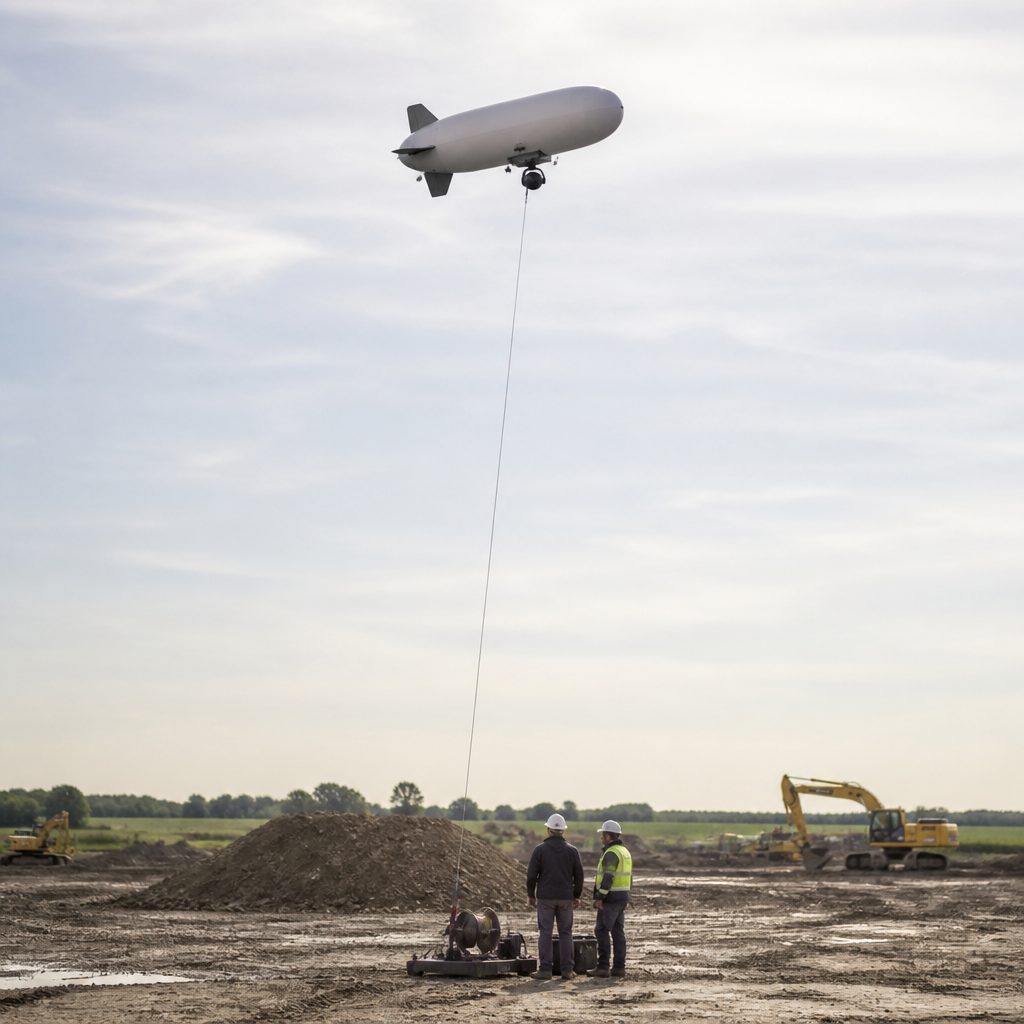
The register search and the photograph answer different questions. One asks whether the company is authorised. The other asks what the site looked like on a given day. A private owner preparing a contract needs both, and neither takes long. The same question is worked through in where organic traffic comes from.