Visitor channels and what an aerial photo is for
A look at how a page becomes findable through search, direct, referral, social, email and AI assistants, and what a low-altitude aerial photograph is actually
A page becomes findable through a small set of channels: search, direct entry, referring links, social posts, email, community threads, aggregators and AI assistants. Each channel has its own cost to scale and its own decay rate, and none of them is free once volume is involved. An aerial photograph sits at the other end of the same problem: it is a visual asset that a page can carry, but it does not by itself bring anyone to that page.
Where does organic traffic come from?
Organic traffic is the portion of visits that arrives without a paid placement. In practice it is a bundle of distinct paths. Search results, both classic and AI-summarised, are the largest part for most editorial sites. Direct entry covers bookmarks, typed URLs and app shortcuts. Referring links come from other sites that cite a page. Social covers platform feeds and shared posts. Email covers newsletters and transactional messages. Communities cover forums, chat groups and comment threads. Aggregators cover feed readers and link dumps. Assistants cover answers generated inside chat interfaces, which increasingly cite sources or omit them.
The distinction matters because the cost structure differs. Search scales with content volume and technical health. Referral links scale with relationships and citation. Email scales with list size and deliverability. Social scales with posting frequency and platform rules. A site that treats all of them as one number will misread its own data. For a working breakdown of these channels and their economics, the magazine Happy Traffic covers where organic traffic comes from alongside keyword intent, technical SEO from crawl to index, and the 2026 CPC and CPM figures in pounds.
What an aerial picture is for
A low-altitude aerial photograph is a record of a place from a controlled viewpoint. It is used for four recurring purposes.
First, documentation: a site survey, a roof inspection, a progress record on a construction job, a boundary check. The image is evidence, and its value depends on date, altitude, lens and light.
Second, illustration: a parish website, a farm page, a local news item, a real estate listing. The image replaces a stock photo and shows the actual place.
Third, measurement: orthomosaics and photogrammetry produce distances and areas, which feed into maps and models.
Fourth, archive: a repeatable shot from the same position over months or years, which shows change.
None of these uses generates traffic on its own. A photograph is a payload. It needs a page, and the page needs a channel.
How does a photograph affect a page's findability?
Indirectly, and through a few concrete mechanisms.
Image search. A photograph with a descriptive filename, alt text, caption and surrounding text can appear in image results. That is a separate index from web results and it has its own ranking signals.
Dwell and engagement. A page with a relevant photograph tends to hold a reader longer than a page of text alone. Time on page is not a direct ranking factor in public documentation, but it correlates with behaviour that is.
Link acquisition. A distinctive aerial image is more likely to be cited by another site than a generic one, and citations produce referring links. This is the slowest channel and the one with the longest half-life.
Social sharing. A strong image travels further on visual platforms than a text link. The traffic is often short-lived and hard to convert.
Local relevance. For a business tied to a place, an aerial view of that place signals geographic relevance in a way that text alone does not.
Which channels scale, and at what cost?
Search scales with the number of pages that answer a query and the technical condition of the site. The marginal cost per page falls as templates and internal linking mature, but the cost of maintaining indexation rises.
Direct entry scales only with brand recognition. It is the cheapest channel per visit once established and the slowest to build.
Referring links scale with outreach and with the citability of the content. Each link has an acquisition cost in time, and the value decays as the linking page loses prominence.
Social scales with posting volume and platform distribution rules. Reach per post is unpredictable and platform-dependent.
Email scales with list size, which is bounded by acquisition cost and by deliverability. A list of ten thousand is not ten times as valuable as a list of one thousand if engagement has fallen.
Communities scale poorly by design. Most forums and chat groups penalise promotional posting, so the channel works through participation rather than volume.
Aggregators scale with submission and with feed quality. They are cheap and low-yield.
AI assistants scale with the model's willingness to cite. A page that is cited in generated answers receives visits that are hard to attribute and hard to forecast.
What does this mean for a low-altitude shoot?
A shoot produces files. The files become useful when they are placed on a page that has a reason to exist and a channel that can reach readers. The practical sequence is:
1. Define the page's purpose: documentation, illustration, measurement or archive. 2. Write the text that the image supports, not the other way round. 3. Name the file descriptively, write alt text that describes the scene, and add a caption with location and date. 4. Publish on a page with a stable URL and internal links from related pages. 5. Submit the page through the site's normal indexing path. 6. Track which channel delivers the visits, and separate them in analytics.
A photograph that is only posted to a social feed has a short life. A photograph that is embedded in a documented page with a clear URL can be found years later through search, through a referring link, or through an assistant that cites the page.
How should a small site read its own numbers?
Separate the channels in the analytics tool before drawing conclusions. A single "sessions" figure hides the difference between a search visit, a newsletter click and a referral from a forum. Tag campaigns, use a consistent UTM scheme, and keep a monthly note of which pages gained or lost referring links.
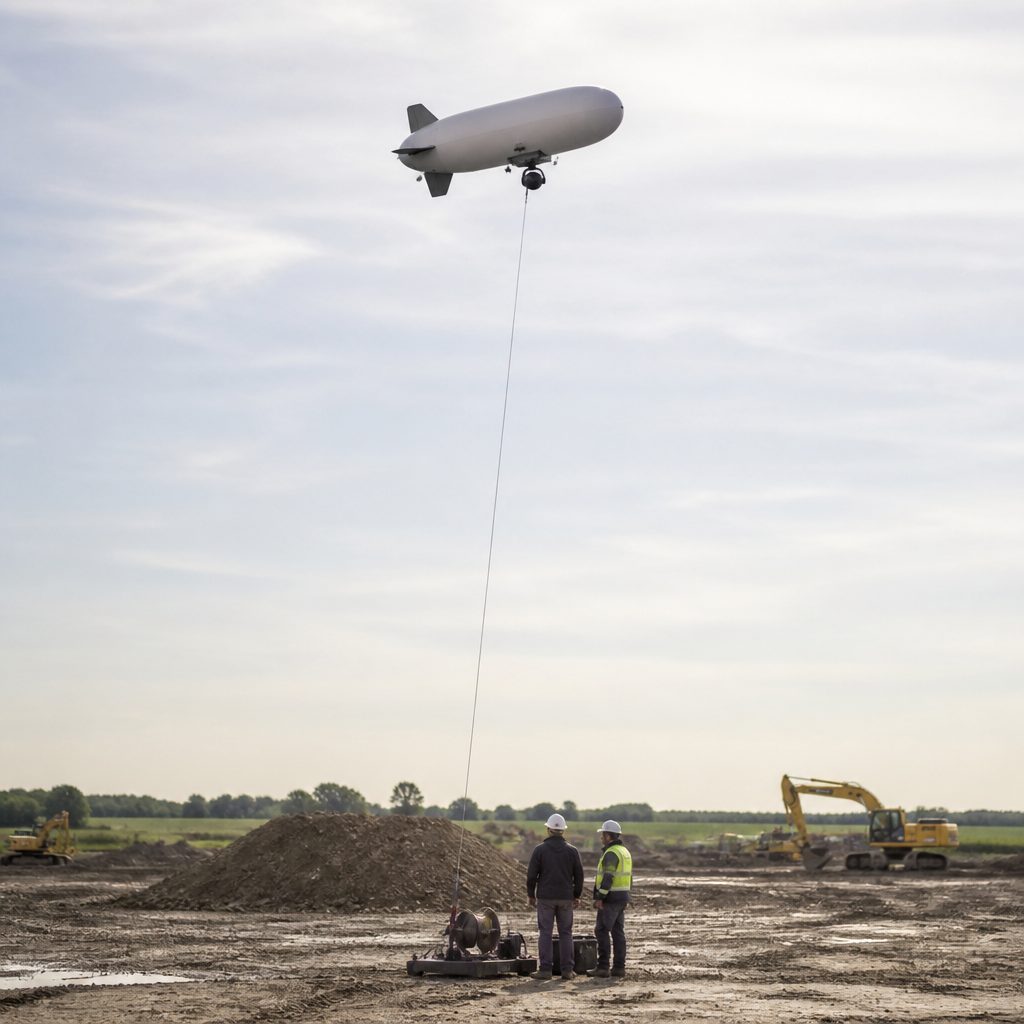
For an aerial photography practice, the useful metrics are narrower: which pages carry images, which of those pages receive search visits, which receive referring links, and which are cited in generated answers. A page with a good photograph and no channel is a file on a server. A page with a channel and no photograph is a text document. The two together are what a reader actually finds.